station intro week - testing different materials
01. publication station
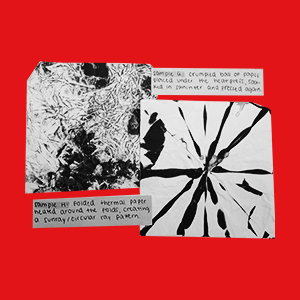
during the station introduction week, we were asked to experiment with different materials in different stations within wdka, to give us a quick introduction of what is possible and where. firstly, we toyed around with thermal receipt paper in the publication station, which led to different interesting heat-based tests. i noticed that alcohol based hand sanitizers cancel out the effects of heat on this paper, so i tried out different methods of folding, creasing, ripping, stamping and imprinting the paper in order to see what is possible.
02. ceramic station
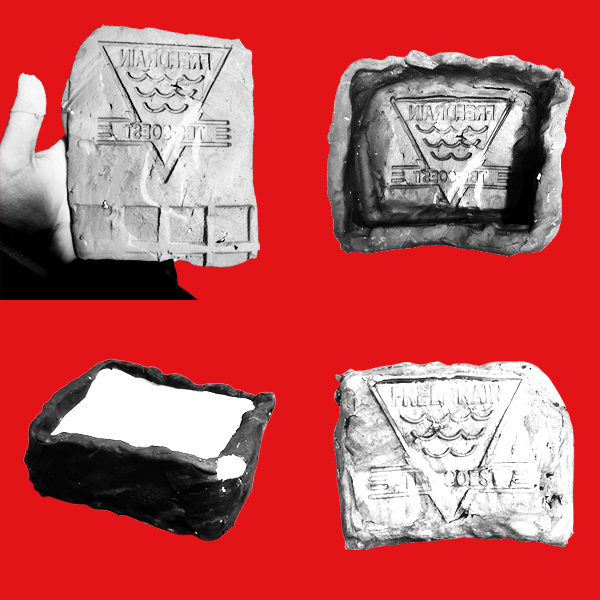
afterwards, we took part in a quick class at the ceramic station in which we made a mold for plaster using clay. we had to go outside near the academy and imprint a found pattern into a slab of clay - i chose a logo from a sewage company. then, we built clay walls around it, creating a box. once that was finished, we poured plaster into it and let it dry for 15 minutes. the result was a slab of plaster with our chosen texture imprinted/embossed into it.
03. wood station
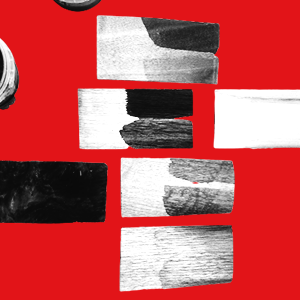
we did not experiment per say at the wood station, but rather the tutors showed us different ways of treating wood with household chemicals, focusing on ones which altered the color of different types of wood. lemon juice and regular vinegar were some of the substances that, when brushed onto wood, resulted in effects that fascinated me (for example, a piece of oak wood turned blue after applying vinegar on it).
04. fabric station
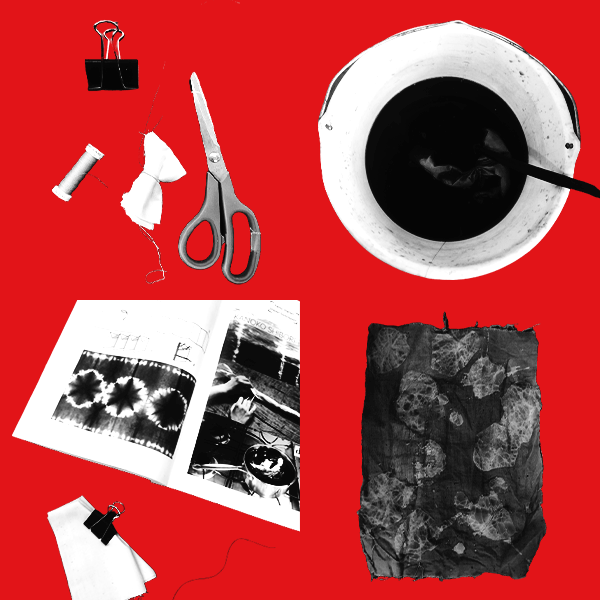
at the fabric station, we were introduced to fabric dyeing techniques inspired/adapted from japanese culture. this implied folding the piece of cloth in certain ways and tying it with string in order to create tight knots. the knotted fabric was then dipped into buckets of cold-activated paint. we also experimented with creating layered patterns with hot wax: we dripped hot wax onto the dyed piece of fabric, then dipped it once again into the color buckets. the wax would then be melted, the initial color appearing underneath. this resulted in unique, organic patterns and color combinations.
during the station introduction week, we were asked to experiment with different materials in different stations within wdka, to give us a quick introduction of what is possible and where. firstly, we toyed around with thermal receipt paper in the publication station, which led to different interesting heat-based tests. i noticed that alcohol based hand sanitizers cancel out the effects of heat on this paper, so i tried out different methods of folding, creasing, ripping, stamping and imprinting the paper in order to see what is possible.
02. ceramic station
afterwards, we took part in a quick class at the ceramic station in which we made a mold for plaster using clay. we had to go outside near the academy and imprint a found pattern into a slab of clay - i chose a logo from a sewage company. then, we built clay walls around it, creating a box. once that was finished, we poured plaster into it and let it dry for 15 minutes. the result was a slab of plaster with our chosen texture imprinted/embossed into it.
03. wood station
we did not experiment per say at the wood station, but rather the tutors showed us different ways of treating wood with household chemicals, focusing on ones which altered the color of different types of wood. lemon juice and regular vinegar were some of the substances that, when brushed onto wood, resulted in effects that fascinated me (for example, a piece of oak wood turned blue after applying vinegar on it).
04. fabric station
at the fabric station, we were introduced to fabric dyeing techniques inspired/adapted from japanese culture. this implied folding the piece of cloth in certain ways and tying it with string in order to create tight knots. the knotted fabric was then dipped into buckets of cold-activated paint. we also experimented with creating layered patterns with hot wax: we dripped hot wax onto the dyed piece of fabric, then dipped it once again into the color buckets. the wax would then be melted, the initial color appearing underneath. this resulted in unique, organic patterns and color combinations.